

Asia-Pacific
Steering Committee asia
Steering Committee
Help us plan what’s next for Energy Evaluation
Join our steering committee
Our Energy Evaluation Asia Pacific Steering Committee has been set up to formulate EEAP’s strategy and prepare strategic and operational planning for the EEAP. The Steering Committee has the authority to assign a team of professional experts to implement the approved strategic plan.
Responsibilities of Steering Committee members
Our Energy Evaluation Asia Pacific Steering Committee meets monthly. They work with our coordinator to organise events, add expertise to newsletters, and exchange ideas and plans.
If you are interested in joining our Steering Committee, please contact Edward Vine.
Our Steering Committee

Steivan Defilla
China
Steivan Defilla
Without effective energy evaluation, the world will not manage to triple installed renewable energy capacity and to double the global rate of improvement in energy efficiency as postulated by COP28 Leaders in 2023. Cities and local communities play an increasing role in supporting these two key energy goals.

Anindita Sharma
India
Anindita Sharma
I consult with organizations to help them design, implement, and measure significant projects, programs, and initiatives. I have over 20 years of work experience in global organizations in the Asia Pacific and the USA. I have worked in the financial services and consulting industries.
My interest in evaluation and impact measurement began after seeing clients challenged by program implementation. I started Aartha, a consulting company, to focus design, implementation, and evaluation of program investments. Our work began with Human Capital programs and is expanding to other areas.
I am a keen student in the field of evaluation. I lead Columbia University’s Venture Capital Club’s Impact Program and serve on Asia Pacific Evaluation Association committee on the regional strategy theme of measuring Sustainable Development Goals. I also represent the ROI Institute USA as their Regional Director in Asia Pacific. The ROI Methodology is used to evaluate program effectiveness and impact in many organizations globally.
I hope to contribute to making evaluation more accessible and widely applied in all sectors for all impacts. Much of our success in development and humanitarian goals depends on the ability to measure and value the outcomes we want to achieve.
On another note, I love the outdoors, nature, and hiking. I read voraciously and love to travel. Above all, I aspire to develop genuine relationships with people in all I do.

Yoonyoung Jung
Republic of Korea
Yoonyoung Jung
Evaluation is not just a tool—it's a commitment to transparency, learning, and delivering real value for people and the planet.
Yoonyoung Jung specializes in evaluation and impact assessment within the sustainable development and green growth sectors. Since joining the Global Green Growth Institute (GGGI) in 2013, she has contributed to advancing evidence-based programming and organizational learning. In her current role as an Officer in the Impact and Evaluation Unit (IEU), she both leads and supports project evaluations funded by international partners, post-intervention assessments, and the production of evaluation reports, including for GGGI’s Rwanda Country Program. Her work is focused on synthesizing evidence to inform decision-making and enhance program effectiveness.
Her experience also includes co-leading the Green Growth Evidence Base initiative, which examines indirect impact pathways and contextual influences when direct outcome measurement presents challenges. Yoonyoung is particularly interested in the intersection of robust evaluation practices and the practical needs of green growth policies, recognizing that adaptive learning and continuous improvement are key to scaling climate-positive, socially inclusive results.
Currently pursuing a Ph.D. in Development Cooperation at Ewha Womans University, Seoul, Korea, Yoonyoung holds a Master’s in Criminology from Dongguk University and a Bachelor’s in Global Studies from the University of Illinois Urbana-Champaign

Edward Vine
USA
Edward Vine
“I am interested in the area of energy evaluation because of the opportunities for improving society, and I am excited in working with new and experienced individuals and organizations in this effort. Evaluation is often misunderstood and underappreciated. I hope this community of evaluators will change that image.”
I am currently an Affiliate at the Lawrence Berkeley National Laboratory (LBNL)*, where I was involved in the evaluation of energy efficiency programs and technology performance measurement for over 45 years. I have been working with colleagues around the world in developing a community of evaluators of energy programs in Asia Pacific. As part of this effort, I have been involved in organizing workshops and webinars in Asia, as well as organizing our first conference in Asia, in Bangkok in November 2017.
Evaluation is critical for improving our way of life: Developing new energy programs and policies as well as improving existing energy programs and policies, for implementing the path to sustainability. Effective evaluation will lead to many opportunities in the private and public sectors in the design, implementation and evaluation of renewable energy and energy efficiency programs and policies. I look forward to working with others (especially the “next generation of young evaluators”) in promoting evaluation.
*Disclaimer: My current work with EEAP is not supported by Lawrence Berkeley National Laboratory or the US Department of Energy. The views and opinions expressed by me do not necessarily reflect the views or positions of these organizations.

Amit Khare
India
Amit Khare
"Evaluation is how the energy efficiency earns its credibility. In a region as diverse and fast-moving as the Asia-Pacific, it is also how we learn what works, share it across geographies, and make sure scarce public and philanthropic resources go where they can do the most good."
Amit Khare is a global clean energy and climate policy expert with over 18 years of experience at the intersection of energy transition, energy efficiency, international policy, and strategic philanthropy. He currently serves as Program Manager at the Sequoia Climate Foundation, where he leads grant-making to accelerate energy transition.
Amit is recognized for his ability to translate complex energy policy challenges into actionable strategies and to forge high-impact partnerships. He has worked extensively with senior policymakers, international institutions, and leading think tanks to drive the implementation of clean energy policies.
A key highlight of Amit’s recent work was his role in supporting partners for the energy track of India’s G20 Presidency. Amit has also played a key role in advancing industrial decarbonization, including efforts to decarbonize the steel and cement sectors. He is also a Member of the UN SEforALL’s Mission Efficiency Global Ambition Task Force.
Disclaimer: My current work with EEAP is not supported by the Sequoia Climate Foundation. The views and opinions expressed by me do not necessarily reflect the views or positions of the Sequoia Climate Foundation.

MA DINGPING
China
MA DINGPING
Evaluation is the cornerstone of sustainable development. It transforms energy sector actions into measurable, systemic impact.”
Ma Dingping is a leading expert in energy efficiency (EE) and renewable energy (RE), with over 20 years of pioneering work in China and across Asia. As the Secretary General of the Chongqing Renewable Energy Society (CRES) and a Fellow at the Asian Institute of Technology (AIT), he has played a crucial role in advancing sustainable energy solutions through strategic capacity building, policy development, and cross-border collaboration.
A dedicated mentor and thought leader, Ma has guided over 100 companies in China and Southeast Asia on EE/RE technology upgrades, project implementation, and policy alignment. His contributions include authoring five nationally adopted energy conservation training manuals and leading industry-specific workshops on industrial and building energy efficiency.
With a strong focus on global knowledge exchange, Ma has trained more than 200 international students at CRES and supported Chinese energy enterprises in expanding into Asia and Africa. He has organized over 200 academic delegations and facilitated 50+ institutional partnerships, fostering on-site EE/RE collaboration worldwide.
His policy influence extends to advising Chinese governmental bodies on sustainable energy roadmaps and contributing to the development of four national EE standards. His expertise also includes conducting energy audits, providing project consultations, and leading regional conferences to scale China’s EE/RE best practices globally.
Committed to international engagement, Ma has partnered with UN agencies such as ESCAP and ILO to promote climate action and green employment initiatives. He has been instrumental in bridging international funding channels to accelerate EE/RE adoption in Global South nations and has spearheaded knowledge-sharing programs across 10+ Southeast Asian countries. Through his leadership, he has also curated Chongqing study tours, welcoming over 100 foreign delegates to explore China’s advancements in sustainable energy.
Ma Dingping’s work continues to drive impactful change in the global transition to clean energy, shaping policies, businesses, and collaborations that advance a more sustainable future.
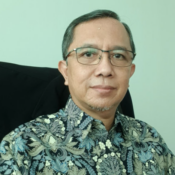
Andhika Prastawa
Indonesia
Andhika Prastawa
Andhika Prastawa – A Principal Engineering Researcher at Indonesia’s Agency for Research and Innovation (BRIN),
Andhika is a distinguished expert in energy systems, engineering research, and innovation. His work focuses on developing sustainable and efficient energy solutions, contributing to Indonesia’s and the region’s energy transition.

Dr. Narro R. Navarro
Republic of the Philippines
Dr. Narro R. Navarro
“Effective energy evaluation is more than measuring consumption—it is the foundation for resilient, efficient, and sustainable organizations. By evaluating energy, we illuminate opportunities for efficiency, strengthen environmental stewardship, and accelerate the path toward sustainable development."
Dr. Narro R. Navarro is a sustainability professional with specialization in environment, social and governance (ESG) frameworks development and implementation. He has 14 years of combined experience in quality management system, laboratory management, risk analysis and management, environmental management, and business model development. He has been working with several government units and the private sector to provide training and continuous improvement for the micro, small, and medium enterprises (MSME). Dr. Navarro is also a recognized researcher in educational sector with specialization on industry-academe collaboration frameworks. He finished his doctorate degree in Management at the Colegio de San Juan de Letran Calamba, Magna Cum Laude, and awarded outstanding dissertation distinction. He is currently an Associate Professor at National University, Philippines and serving as Chair of the Graduate School and Professional Studies.

Margery B. Bautista
Republic of the Philippines
Margery B. Bautista
To implement and monitor progress of the global goals for sustainable development, there is indeed the indomitable value of monitoring, evaluation and learning. By harnessing the power of accurate, timely and relevant data, policy and decision-makers are well-informed and guided to improve processes, catalyze innovation and adapt to solutions that will restore and protect our planet, positively impact human lives and drive collaboration towards the achievement of our shared goals and progress of communities. Thus, evaluation ensures that we create a better and regenerative future for all.
Margery B. Bautista is a development, policy, advisory and research professional — leveraging her over 18 years of versatile experience and affiliations in the business, government, non-profit, academe and international organizations. Her diverse background and exposure with different key stakeholders and institutions honed her expertise and interests in varied areas from human development, energy, environment, tourism, corporate governance, ESG, sustainable development, industry relations, and responsible investment, among others.
Being aware and experiencing the adverse effects of climate change in a vulnerable country like the Philippines, she currently serves as a Climate Change/Climate Resilience Specialist and Coach with DevConsult Inc. together with the University of Queensland under the Australia Awards and Alumni Engagement Program-Philippines. She mentors and advises national and regional level program managers, supervisors, and implementers in mainstreaming climate resilience in different projects and activities through the use of the theory of change framework to improve the competencies of civil servants which in turn will have a multiplier effect in the delivery of public services. She previously consulted for Oceanus Conservation, Asia Group Advisors, and the Evaluation Office of the United Nations Population Fund (UNFPA), served in various Philippine national government agencies as Chief Officer, and worked at MSCI Hong Kong Limited and Institutional Shareholder Services Inc, both are US-based research and financial services advisory firms.
Advocate, consultant, and speaker for renewable energy development, corporate social responsibility, ESG, sustainable development, and impact evaluation, she is keen and actively participating in different energy and industry conferences and seminars to influence key stakeholders in the industry towards climate-smart development pathway, encourage thought-provoking discussions, represent an inclusive voice for development of women, children and most vulnerable sector and spark ideas in the evolving energy and power landscape and prominent trend of renewable energy in emerging markets in Asia and the Philippines.
With a growth-mindset and as a continuous learner, she holds a Master’s in Development Policy from De La Salle University; a Certified Professional Manager (CPM) license under the International Federation of Professional Managers (IFPM) London; Decent Work Specialty Course Certification from ITC Turin-International Labour Organization; and Bachelor’s in Political Science from De La Salle University-Dasmarinas.
She hopes to contribute to the evaluation community and the institutionalization of the use of evaluation in examining the performance of all programs and projects in all fields. Highlighting its crucial role, individuals and organizations can adapt and become more resilient in identifying areas for improvement and allowing for adjustments in strategies to better achieve sustainable development outcomes.
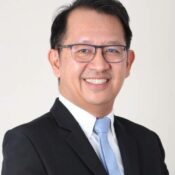
WONGKOT WONGSAPAI
Thailand
WONGKOT WONGSAPAI
"The true value of an energy and climate policy is measured not by its ambition, but by its verified abatement. Rigorous evaluation transforms climate intent into measurable impact, ensuring every invested resource drives deep decarbonization"
Mr. Wongkot Wongsapai is currently vice president of the Office of National Higher Education Science Research and Innovation Policy Council (NXPO), Thailand and an associate professor in energy engineering, Chiang Mai University. His interest in evaluation is deeply rooted in his 30 years of experience managing over 240 projects focused on energy efficiency, renewable energy, and climate change. he has actively developed the Thailand data analysis system under the Energy Conservation and Promotion Act and co-developed the performance tracking methodology and system for Thailand’s greenhouse gas emission mitigation in national level reported to UNFCCC.
Disclaimer from Mr. Wongkot Wongsapai: My current work with EEAP is not supported by the Office of National Higher Education Science Research and Innovation Policy Council (NXPO) or Chiang Mai University (CMU). The views and opinions expressed by me do not necessarily reflect the views or positions of these organizations.

Dr. Cristina Alfonso
Republic of the Philippines
Dr. Cristina Alfonso
"Energy evaluation is imperative as challenges such as climate change and energy insecurity increase the economic and environmental risks faced by every country. An effective energy policy should be sustainable, equitable and economically viable. Evaluation ensures that policy reforms optimize limited resources, use evidence-based decision-making and are well-communicated to stakeholders to compel action."
Dr. Cristina Alfonso is an economist with over 15 years of experience in Asian economic policy analysis particularly in Asian Regional Cooperation and Integration. Regional cooperation and integration research closely looks at the linkages and interconnection of national economies for mutual benefits. Her research covers the different dimensions of Asian cooperation such as cross border infrastructure, regional supply chains, investments, finance, macroeconomic policies, and regional public goods. The latter includes policy analysis on climate change, renewable energy, and energy transition issues. She has worked for the Asian Development Bank, the Philippine government and the private sector. Throughout her career she has been engaged in crisis related projects. She was involved in monitoring the economic recovery from the 1997 Asian Financial crisis of Asian economies. She was also the regional cooperation expert for policy advice on COVID-19 economic recovery in Southeast Asia. As the region contends with the energy crisis resulting from the Middle East conflict, she has advocated for energy policy reforms to fast track the transition to clean energy. She was the resident energy economist for the Philippine Solar and Storage Energy Alliance (PSSEA), bridging the interests of the corporate sector and the Philippine government. Currently, she is the Research Associate on Energy Infrastructure of an Asian Development Bank project supporting the Philippine Department of Economy, Planning and Development.
Dr. Alfonso received her PhD in Energy Economics from Curtin University in Australia. She hopes to impart to the energy evaluation community a holistic approach to policy analysis encompassing macroeconomics, development, and energy economics.

SADEEP ACHARYA
Nepal
SADEEP ACHARYA
"Evaluation is the foundation of continuous improvement—it turns data into better decisions and better decisions into meaningful impact."
Mr. Sadeep Acharya is a Mechanical Engineer and Project Manager from Nepal with expertise in energy systems, infrastructure development, and engineering management. He pursued a Master’s degree in Energy System Planning and Management at Tribhuvan University, where his research focuses on AI-driven probabilistic forecasting of power demand and renewable energy generation. His professional experience includes project management, HVAC systems, sustainable energy planning, and engineering leadership. Sadeep is committed to promoting evidence-based decision-making, innovation, and continuous improvement through evaluation.

BENEDICTUS DWIAGUS STEPANTORO
Indonesia
BENEDICTUS DWIAGUS STEPANTORO
I often say that evaluation completes me. As a planner, I help shape the future; and as an evaluator, I help others measure and make sure the plans deliver on their promise in the future. As energy increasingly defines that future, I hope to contribute by advancing evaluation practice and use for Asia-Pacific’s energy transition.
Dwiagus is a seasoned planning and M&E specialist with over 20 years of experience in the development sector, spanning public policy, infrastructure, and socio-economic governance. He brings over 15 years of dedicated expertise in project design, performance management, and quality assurance. Throughout his career, he has driven technical assistance and capacity-building initiatives for major Indonesian government agencies (including Bappenas), bilateral donors (such as DFAT, GIZ, USAID), and multilateral bodies (including the World Bank, ADB, and UN agencies).
He holds a B.Eng. in Regional and City Planning from ITB and an M.A. in Urban Management from Erasmus University Rotterdam. Passionate about advancing the profession, he is also the co-founder of the Indonesian Development Evaluation Community (InDEC).
He has been always committed to professionalization of evaluation, and campaign for use of evaluation in Indonesia. He co-founded InDEC, and manages and facilitates the interaction and engagement among evaluators in Indonesia for learning and capacity building.

FAYYAZ AHMED FAYYAZ
Pakistan
FAYYAZ AHMED FAYYAZ
"Evaluation is not merely about measuring what has been achieved; it is about learning what works, understanding what needs to improve, and generating evidence that drives sustainable change."
Fayyaz Ahmed Fayyaz is a Monitoring, Evaluation, Accountability and Learning (MEAL) and project management professional with more than 20 years of experience across humanitarian response and development programming. His expertise includes MEAL system design, assessments, evaluations, data analysis, accountability, digital solutions, proposal development, and organizational learning.
He has supported large-scale, multi-donor programmes implemented by organizations including Mercy Corps, VSO International, Save the Children International, the Aga Khan Agency for Habitat, NRC, ILO, UNDP, and IRC. His experience spans Asia and Africa, with direct assignments in Pakistan and Somalia and remote support to programmes in several countries, including Afghanistan, Bangladesh, Yemen, Sudan, Malawi, and Lebanon.
He currently serves as PPM Hub Coordinator for DHIS2 at Mercy Corps and as an Evaluation Expert with the Madiba Group in Germany. He is also a member of the Pakistan Evaluation Association and a Research Fellow with Torque Communities. His professional interests include digital monitoring systems, DHIS2 implementation, impact evaluation, accountability, and strengthening organizational learning.

ISHTIAQ A CHISTI
Bangladesh
ISHTIAQ A CHISTI
“Even the best-intentioned programmes can only succeed when their outcomes are properly measured and evaluated. My experience in the United States and Bangladesh has shown that credible, transparent evaluation is essential to ensure programmes reach the right people, deliver meaningful results, and remain sustainable.”
Ishtiaq A. Chisti is a renewable energy professional involved in the development of utility-scale, grid-connected, and rooftop solar projects in Bangladesh. He also advises on energy efficiency, renewable energy, and public–private partnerships to support sector development in Bangladesh and across Asia.
Earlier in his career, he worked for several years as an Engineering Manager at Southern California Edison, a major electric utility in the United States. He holds a Master’s degree in Mechanical Engineering from the University of California, Berkeley, and a Bachelor’s degree in Mechanical Engineering from Texas A&M University.
Mr. Chisti currently serves as Executive Director of DRE, a Singapore-registered renewable energy company. As Chief Consultant at IC Consulting, he has provided advisory services to organizations including the International Finance Corporation, part of the World Bank Group, and USAID.

DR ENRIQUE ESTRELLADO LOZARI
Philippines
DR ENRIQUE ESTRELLADO LOZARI
“Energy evaluation matters to me because it turns evidence into sound judgement and better action. It helps us understand what works, why, for whom and under what conditions, so that energy policies and programs can deliver fairer, more sustainable and lasting results.”
Dr Enrique Estrellado Lozari is an economist, evaluation specialist and results-based management adviser with more than 25 years of experience in impact evaluation, monitoring, evaluation and learning, theory of change, strategic planning and evaluation capacity building. He is President of Results-Based Initiatives Consultancy Services, Adjunct Senior Research Fellow at Griffith University’s Australian Rivers Institute, and President of the Association of Monitoring and Evaluation Professionals of the Philippines. He works with governments, universities, civil society organizations and development partners to strengthen evaluation systems, support evidence-informed decision-making and translate learning into better policies, programs and development outcomes.

DR ABHINAV JINDAL
India
DR ABHINAV JINDAL
“Energy transitions should be judged not by the investments announced, but by the measurable outcomes they deliver. Rigorous evaluation connects policy ambition with real-world impact, helping us understand what works, what does not, and how energy policies can improve through evidence. I see EEAP as an important platform for advancing policy-relevant evaluation across the Asia-Pacific region.”
Abhinav Jindal is a senior energy economist and researcher in the Indian power sector.
He holds a PhD in Economics and has 22 years of experience working with utilities across financial, commercial, techno-economic, and regulatory aspects of the power sector. He is an Affiliate (Honorary) with the University of Oxford’s, India Transition Finance Programme (ITFP) and an Editorial Board Member (Honorary), The Electricity Journal.
His research lies at the intersection of economics, sustainable finance, energy, and the environment. Abhinav has co-authored over 50 publications, including journal articles, reports, conference papers, book chapters, and case studies. His work focuses on coal plants, carbon markets, power markets, emerging technologies, transition and physical risks, market design, regulation, and competition in the power sector. He also writes op-eds for newspapers and other media outlets such as the World Economic Forum, Phenomenal World, Foreign Policy, Financial Express, IEEFA and others.
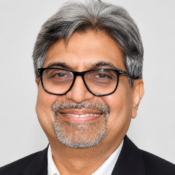
DR. RAJIB K. MISHRA
India
DR. RAJIB K. MISHRA
"Energy evaluation provides the evidence needed to ensure that policies and investments deliver measurable economic, environmental, and social outcomes. As countries in Asia pacific accelerate the energy transition, evaluation helps identify what works, improves decision-making, and ensures a just, reliable, and cost-effective pathway to net zero. Robust evaluation strengthens accountability, promotes innovation, and enables governments and institutions to achieve sustainable energy goals with greater confidence."
Rajib K. Mishra is an energy sector leader, academic, and policy expert with over four decades of experience spanning power generation, transmission, electricity markets, cross-border energy trade, and sustainable energy transition. As Executive Director of the Integrated Research and Action for Development (IRADe), one of India’s leading public policy research institutions, he leads strategic initiatives on energy systems, climate policy, market design, and regional energy cooperation.
Before joining IRADe, Dr. Mishra served as Chairman and Managing Director of PTC India Limited, India’s premier power trading company, and held senior leadership positions with POWERGRID and NTPC. Throughout his career, he has contributed significantly to the evolution of India’s electricity markets, renewable energy integration, cross-border electricity trade, and market-based power sector reforms.
Dr. Mishra has advised governments, multilateral development agencies, and international organizations on energy policy, regulatory frameworks, and regional energy cooperation. His work focuses on evidence-based policy analysis, energy transition, electricity market design, sustainable infrastructure, and institutional development. He has also played an active role in strengthening regional dialogue on energy security and clean energy across South Asia.
A respected author and thought leader, Dr. Mishra has published several books and numerous technical papers on energy, electricity markets, business strategy, and sustainable development. He holds a Ph.D. in Business Administration, an Masters in Power Systems from the Norwegian University of Science and Technology (NTNU), Norway, and was a Visiting Scholar at the University of Texas at Austin, USA.
Dr. Mishra is committed to promoting evidence-based policymaking, fostering regional collaboration, and support sustainable development and energy transition across the Asia-Pacific region.